Dairy Processing & Packaging Equipment: A Gujarat Buyer’s Guide
Food Mech Asia Journal ·
A dairy machinery purchase often connects several operations: receiving milk or other inputs, processing, temporary storage, filling, sealing and distribution. The exact sequence depends on whether you make fluid milk, cultured dairy products, fresh cheese or another product. Buyers in Gujarat need a line specification that fits the product and the intended distribution model, not just a list of machines.
Quick answer: Dairy processing and packaging equipment
Start with the dairy product, package format and net daily volume. Define the process with a qualified dairy technologist, then compare the processing vessel or continuous system, transfer equipment, buffer storage and suitable filling machine as a connected line. Chilled and shelf-stable products require different validated process and packaging arrangements.
Match equipment to the dairy product
Fluid milk, lassi, curd and paneer present different requirements for product movement, handling and packaging. A liquid filling machine is not a universal solution for thick or particulate dairy foods. Record the viscosity range, permitted product handling, fill volume, package type and how the package will be closed.
A dairy technologist should specify the processing sequence and quality requirements. When discussing a supplier's equipment, ask which steps it covers and which remain the responsibility of your factory. A quotation for a filler alone does not include all the processing and utility equipment required upstream.
Choose a filling and packaging arrangement
Compare sealed pouches, cups, bottles and other formats based on your product requirements and distribution system. For each option, identify packaging material supply, closure integrity, filling accuracy and available change parts. Ask which materials and container dimensions have been validated on the proposed machine.
Do not assume that a filler suitable for one dairy product will provide the same performance for another. A shelf-stable aseptic system involves coordinated processing, packaging and hygienic controls and is not just an alternative pouch shape. Obtain specialist advice for process selection and hold suppliers to written, product-specific conditions.
Use daily volume to calculate useful line capacity
Imagine a planned 800-litre production batch that must be packed into 200 ml containers within a four-hour filling window. That requires 4,000 packs, or 1,000 accepted packs per hour. If productive availability is estimated at 80%, the nominal planning requirement becomes 1,250 packs per hour before additional rejects.
This is a capacity calculation, not a recommended dairy processing schedule. In a real facility, the processing specialist must confirm product-specific holding times, operating conditions and whether the line can safely support the proposed filling window. Make the same calculation for your smallest and largest planned pack sizes.
Evaluate cleanability and utility demand
Ask suppliers to identify all product-contact components and explain how their recommended cleaning method reaches tanks, valves, pipes and filling equipment. If cleaning-in-place is proposed, request a process description, utility demand, documentation and the responsibilities for installation and validation. If manual cleaning is involved, confirm access and required disassembly.
Have your dairy process specialist assess material compatibility and hygienic design. Request realistic information about power, water, drainage and the appropriate heating or cooling utilities. The cost of a machine can be misleading if the quotation excludes supporting pumps, pipework, controls and cleaning infrastructure.
Ask for evidence before accepting a dairy line
Bring drawings or photographs of your target packaging, product specifications and desired shift output. Request a demonstration using a comparable product and, where appropriate, a controlled trial coordinated with your quality team. Record fill accuracy, accepted throughput, seal or closure results, changeover work and cleaning support.
Request a clear responsibility matrix for processing, filling, controls, services and installation. For each item, identify the vendor responsible and the evidence required for acceptance. Consult the existing cold-chain buying guide for refrigeration and distribution questions rather than treating those questions as resolved by the filling machine alone.
Plan your supplier meetings at Food Mech Asia 2027
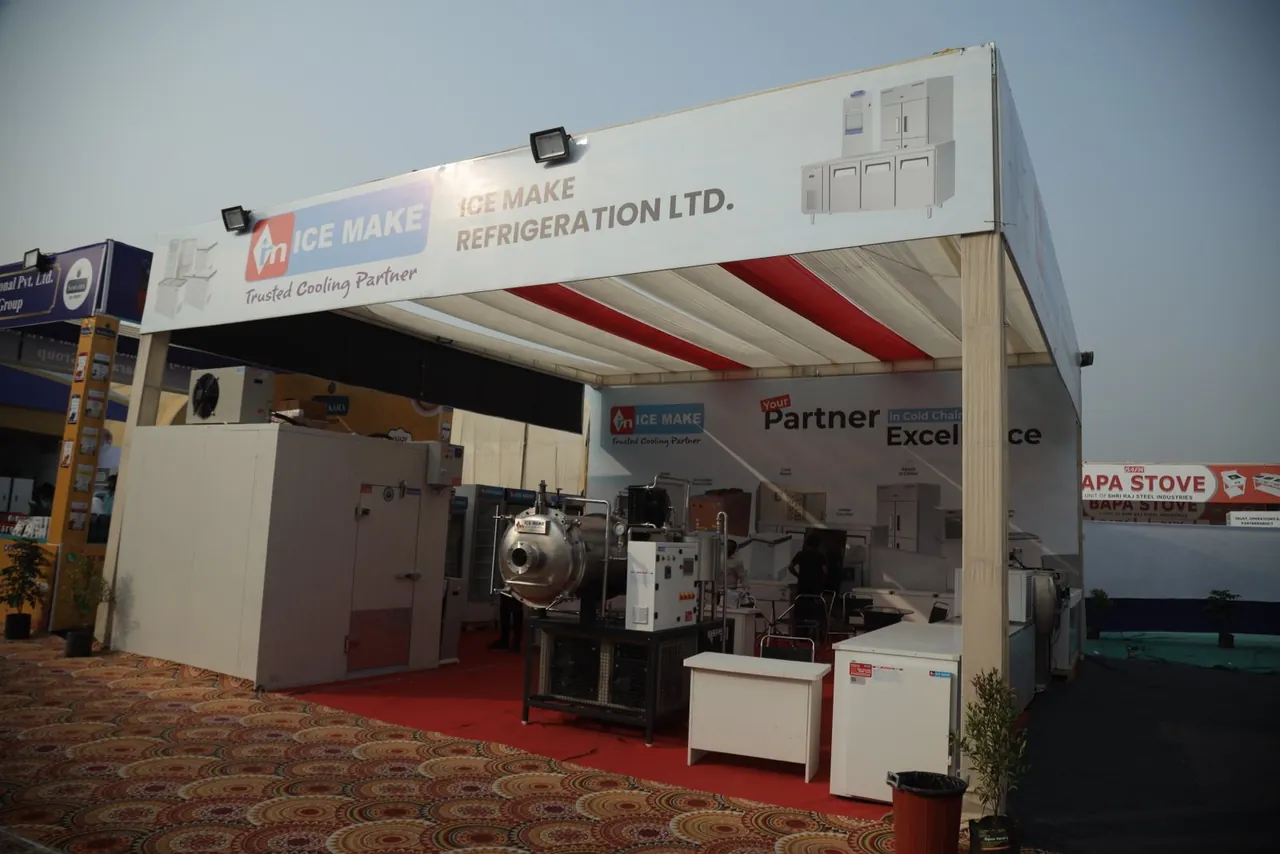
Food Mech Asia’s 16th edition is scheduled for 12–15 February 2027 at Vanita Vishram Ground, Surat, Gujarat, India. Review the official exhibition brochure and ask the organizer to confirm relevant participants, entry arrangements and the latest programme. The photographs on this page show earlier editions and are not a confirmed 2027 exhibitor list.
Get a visitor pass · Book an exhibition stall · Contact the organizer
Frequently asked questions
Can the same filler pack milk and lassi?
Only if the specific machine and its product-contact parts are suitable for both products and the required hygienic process. Obtain compatibility confirmation and a product trial.
How do I size a dairy filling machine?
Use total saleable packages and the validated filling window, then account for downtime and rejects. Make sure the upstream process supports that output.
Does a new package automatically extend dairy shelf life?
No. Shelf life depends on validated processing, packaging, storage and product characteristics. A qualified dairy or food safety specialist should assess it.
Can I find dairy machinery suppliers at the Surat exhibition?
Dairy technology is relevant to the exhibition's industry scope, but confirm the final exhibitor directory and demonstration availability with the organizer.
Related food industry guides
References and planning resources
- Food Mech Asia – official exhibition brochure
- Tetra Pak Dairy Processing Handbook – pasteurized and ESL dairy products
- Tetra Pak – dairy processing and packaging categories
This AI-assisted editorial guide is intended for procurement planning. Illustrated calculations are hypothetical, and manufacturers’ reference materials do not establish participation or endorsement at the 2027 exhibition. Confirm technical requirements with qualified professionals and suppliers.